The Project Economy, as you will see, has nothing to do with robots replacing you. It's about people, not automation. That's something I didn't learn in a classroom, but on a safari in Kenya.
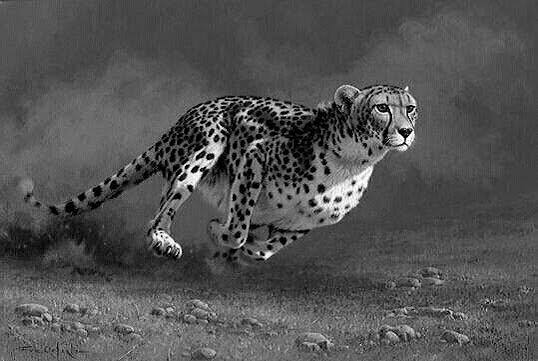
In August of 2000, I sat in an oversized, steel reinforced gated jeep on a raised mound in the Maasai Mara National Reserve in Kenya, Africa. We were all hoping to catch a glimpse of a cheetah running. The guide explained to us that the dry weather keeps grass short, making it easier to spot a sprinting cheetah across the open plains and, because of competition with lions and hyenas, cheetahs usually hunt during daylight, so we had a good chance of seeing one.
What happened next blew our minds. We got to see a cheetah run almost 70 miles an hour. At least, that is how fast the guide said it was running. Even though it was only 20 to 22 seconds, it still qualifies as the single most amazing thing I have seen after witnessing my first child being born.
Later that afternoon we all sat at a café about 30 to 40 minutes outside the reserve sharing our safari experience, but with most agreeing that the cheetah was the highlight. Although it was exciting to talk about the cheetah, my attention was distracted watching two merchants conclude their business at the other end of the café. But what caught my attention was the fact that no money changed hands and the gentleman helping him was a competing café owner we passed on the way to the café.
So, as my fellow tourists were defending the use of the word football to mean soccer, I escaped my debate and nosily asked the merchant, whose name was Mr. Kenyatta, “do all merchants do business with their competition in this region”? He replied, “only the successful ones. The successful ones focus on collaboration over competition and treat each day like a project instead of a job or business.”
That night I couldn’t get his words out of my head, “collaboration over competition and treating each day like a project, instead of a job or business.”
“Collaboration over competition and treating each day like a project, instead of a job or business.” ~ Mr. Kenyatta (Cafe Owner in Kenya)
With Mr. Kenyatta’s words as my guide, as soon as I got back to the states in September of 2000, I established 1099 Nation to track global entrepreneurship. From then on, I met with merchants and builders at every level and jotted down their responses to my questions. I then used the IRS 1099 tax designation because I knew it was exactly how the world would come to describe these builders in the project economy.